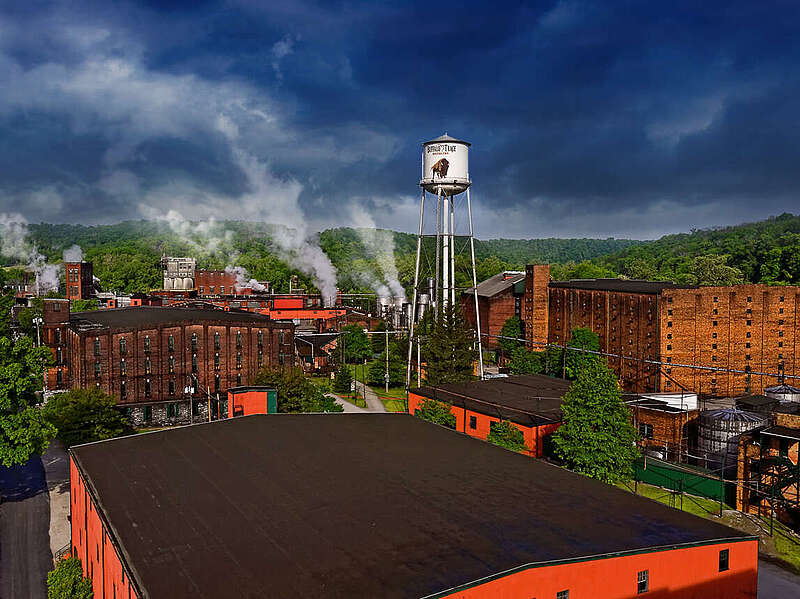
Single Malt Whisky

Sylvia Simm | 25. February 2025

Definition, production and specialities

Single malt is a household name among whisky connoisseurs and a true masterpiece of the art of distillation! What exactly is single malt and what makes it so special? We want to dedicate a separate page to this exquisite spirit.

Single malt whisky is a type of whisky that is made from malted barley and comes from just one distillery. In contrast to blended whisky, which mixes distillates from different distilleries, single malt preserves the unique character of its origin.

90% of all single malts worldwide come from Scotland! However, Ireland and Japan are also known for their single malt production and single malts are also produced in Germany with good results.

Table of content

What is Single Malt Whisky?

In short: a single malt whisky comes from a single distillery, is made from 100% malted barley and is distilled in copper pot stills. Single' means that it comes from a single distillery. The  word 'malt' stands for malted barley.

Single Malt vs. Scotch Whisky - what's the difference?

At first glance, the terms are often equated, but in fact there are clear differences.

  • Scotch whisky is a protected designation of origin. In order for a whisky to bear this name, it must be distilled in Scotland, matured there for at least three years and produced in accordance with the rules of the Scotch Whisky Association. These include the use of oak casks, a minimum alcohol content of 40 % vol. and certain distillation methods.
  • Single Malt Whisky, on the other hand, primarily describes the production method - i.e. the exclusive use of malted barley and production in a single distillery. This type of whisky is not only produced in Scotland, but all over the world, for example in Ireland, Japan, Germany and the USA.

This means that every Scottish single malt is automatically a Scotch whisky, but not every single malt comes from Scotland. A single malt from Japan or Germany fulfils the same craft criteria, but can never be described as Scotch.

Remember: Scotch whisky defines the origin, single malt whisky defines the production method.


Single Malt vs. Blended Whisky

Not all whisky is the same. The two best-known categories are single malt and blended whisky. Both have their place, but differ significantly in terms of production, flavour and target group.

  • Single malt whisky is made exclusively from malted barley and comes from a single distillery. Through traditional distillation in pot stills and maturation in oak casks, it retains the typical character of its origin. Each single malt is therefore unique and represents the style of its distillery.
  • Blended whisky is a combination of different whiskies. Single malts are blended with grain whiskies (made from unmalted grain). The aim is to achieve a consistent, balanced flavour that can be reliably reproduced regardless of the vintage or distillery. Brands such as Johnnie Walker and Chivas Regal have popularised the blend worldwide.
  • The most important differences at a glance:

Raw materials: Single malt = 100% malted barley
Blended = mixture of malt and grain whiskies

Origin: Single malt = one distillery
Blended = several distilleries

Flavour: Single malt = complex, individual, often more intense
Blended = harmonious, balanced, more accessible

Price: Single malts are considered a premium product
Blends are usually cheaper and more widely available

Teaspooned Whisky

Teaspooned Whisky is a special case within the whisky categories. This is basically a single malt that has been blended with a very small amount (often literally "a teaspoonful") of whisky from another distillery.

The background to this is that many distilleries want to prevent their single malts from being sold under the distiller's name by independent bottlers. The "teaspoon process" means that the whisky is no longer legally recognised as a pure single malt from this distillery, but as a blended malt - even if the proportion of the foreign distillery is negligible.

For connoisseurs, this means that teaspooned whiskies usually offer the full quality of a single malt, but are often cheaper as they cannot be sold under the famous distillery name.

Our tip: If you are looking for a bargain with high quality, you should specifically look for "blended malt" or "teaspooned whisky" in independent bottlings.

How Single Malt Whisky is made

The production of every single malt whisky begins with the production of the malt. For this, the barley is soaked and allowed to germinate, then dried and ground. The resulting malt is then soaked in water, which is known as mashing. The sugar is dissolved out of the malt during this process. Yeast is added to the mash for fermentation and the liquid is then distilled. Distillation takes place in copper stills, the pot stills.

The distillate is then stored in oak barrels. The duration of storage has a significant influence on the flavour of the single malt.

You can read about the entire production process in great detail here .

Special flavours & styles of Single Malt Whiskies

Single malts offer a wide range of flavours - from fruity and floral to malty and sweet to smoky and peaty. Regional influences, the climate and the cask maturation characterise each whisky.

Fruity & floral: light and elegant whiskies

These whiskies are characterised by notes of fresh fruit, flowers and vanilla. Beginners in particular appreciate their soft, accessible nature. Typical representatives are the lowland Scotch Auchentoshan, Teeling from Ireland, Yamazaki and Kavalan from Asia.

Malty & sweet: full-bodied and spicy whiskies

Flavours of malt, caramel, honey and spices take centre stage here. Special cask maturation often provides additional depth. Wonderful whiskies such as Dalmore and Glenmorangie, but also the German Slyrs or the Amrut from India are examples of this.

Smoky & peaty: strong and maritime whiskies

These whiskies are known for their intense smoky flavours and complexity. The peat smoke comes from the production process and gives them a characteristic flavour. Laphroaig and Ardbeg from the island of Islay are among the strongest representatives of this style. However, a Japanese Nikka and a Swedish Mackmyra are also among the smoky single malts.

Origin: Single Malt Whisky worldwide

Although single malt is often associated with Scotland, it is now produced worldwide - including in Ireland, Japan, Germany and the USA. Each region brings its own signature flavour to whisky.

Scotland

The origins of single malt whisky production lie in Scotland. Here, the rules of the Scotch Whisky Association stipulate exactly how a genuine single malt Scotch must be produced. These include the exclusive use of malted barley, production in a single distillery and maturation in oak casks for at least three years. The whisky must also have an alcohol content of at least 40%.

Interestingly, only single malt was produced in the early days. However, from 1853 onwards, it increasingly faded into the background - in favour of blended whisky, which dominated the market for over a century. The decisive impetus came from Scotsman Andrew Usher, who began blending different whiskies in the 1840s. His aim was to create a consistent flavour. These new creations were initially referred to as vatted whisky and heralded the age of blends.

It was not until 1963 that Glenfiddich became the first distillery to consciously reintroduce single malt to the market, laying the foundations for its current renaissance. Although blended whisky continues to dominate with a market share of around 90 %, single malt is regarded as the premium segment of the whisky world.

Tip: If you want to discover the perfect single malt, you should taste the different regions of Scotland to experience the subtle differences in flavour. A tasting set with bottlings from different regions can be an exciting way to discover the diversity of Scottish single malt.

A selection of Scottish Single Malt Whiskies

Spey Tenné
Spey Tenné
0,7/ l · incl.  VAT
Ledaig 10 Years
Ledaig 10 Years
0,7/ l · incl.  VAT
Eden Mill Sherry Cask
0,7/ l · incl.  VAT
Ballindalloch Single Cask Bourbon Barrel 8Y-2017/2025
0,7/ l · incl.  VAT
Edradour Amarone Dal Forno Romano Casks - 200th Anniversary 22Y-2003/2025
0,7/ l · incl.  VAT
Port Askaig 17Y-/2023
0,7/ l · incl.  VAT
Ardbeg Uigeadail
Ardbeg Uigeadail
0,7/ l · incl.  VAT
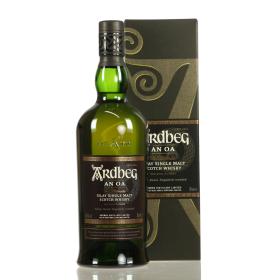
Ardbeg An Oa Warehouse Edition
0,7/ l · incl.  VAT
Glendronach 40Y-/2025
0,7/ l · incl.  VAT
Bunnahabhain Calvados Cask Finish Fèis Ìle 2022 1998/2022
0,7/ l · incl.  VAT
Smokehead Twisted Stout
0,7/ l · incl.  VAT
Macallan 'Whisky.de exclusive' 24Y-1997/2022
0,7/ l · incl.  VAT

Ireland

The production of single malt whiskey has a long tradition in Ireland, but for many decades it was maintained almost exclusively by the Bushmills Distillery in the north of the country. While numerous distilleries remained active in Scotland, the decline of the Irish whiskey industry in the 20th century led to the closure of many distilleries and a sharp decline in the variety of whiskey styles.

It was only with the founding of the Cooley Distillery in the 1980s that a trend reversal began. Cooley focussed specifically on the production of single malts, breaking through Bushmills' long-standing monopoly position. The market has developed rapidly in recent years: Numerous new distilleries such as Teeling, Dingle and Waterford have established themselves and are producing modern interpretations of the Irish single malt.

For a long time, it was assumed that Ireland produced almost exclusively blended whiskey. Even though blends continue to have the largest market share, interest in Irish single malt is growing steadily - both nationally and internationally.

Tip: If you want to discover Irish single malt, you should try classics such as Bushmills 16 year old as well as exciting new releases such as Teeling Single Malt, Waterford The Cuvée or Dingle Single Malt.

A selection of Irish Single Malt Whiskies

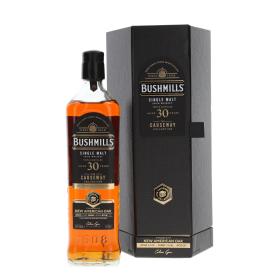
Bushmills - The World Wood 21Y-/2023
0,7/ l · incl.  VAT
West Cork Port Cask Finish
0,7/ l · incl.  VAT
Teeling Cherry Wood Single Cask - Whisky.de Exclusive 2017/2025
Teeling Cherry Wood Single Cask - Whisky.de Exclusive 2017/202511%
0,7/ l · incl.  VAT
Bushmills 10 Years
Bushmills 10 Years
0,7/ l · incl.  VAT
West Cork Rum Finish - Cask Strength
0,7/ l · incl.  VAT
Fercullen The Estate Series Issue No 3 - The Gates /2023
0,7/ l · incl.  VAT
West Cork Maritime Release - Sherry Cask
0,7/ l · incl.  VAT
Bushmills Three Wood 12 Years
0,7/ l · incl.  VAT
Bushmills PX Sherry Cask - The World Wood Series 12 Years
0,7/ l · incl.  VAT
Killowen Rum & Raisin
0,7/ l · incl.  VAT
Dingle Single Malt
Dingle Single Malt
0,7/ l · incl.  VAT
ELEMENT Lore R/1.0
ELEMENT Lore R/1.0
0,7/ l · incl.  VAT

Japan

Single malt whisky from Japan stands for precision and perfection!
In recent decades, Japan has established itself as one of the leading nations for high-quality single malt whisky. While single malts have been produced in Scotland and Ireland for centuries, the Japanese whisky tradition only began in the 1920s. Japan orientated itself strongly on Scottish methods, but developed its own signature style of production, and in recent years Japanese single malt has gained prestige worldwide. Limited edition bottlings fetch top prices and demand often exceeds supply. If you want to try a Japanese single malt, you should not only stick to the well-known names, but also keep an eye on new releases and independent bottlings.

Good to know: Interestingly, the Japanese prefer blended whisky to single malt!

Tip: For an introduction to the world of Japanese single malts, we recommend the Yamazaki 12 year old, the fresh Hakushu Distiller's Reserve or the characterful Yoichi single malt.

A selection of Japanese Single Malt Whiskies

Tenjaku Japanese Pure Malt
0,7/ l · incl.  VAT
Suntory Hakushu 12 Years
0,7/ l · incl.  VAT
Nikka Yoichi Single Malt
0,7/ l · incl.  VAT
Sakurao Single Malt
Sakurao Single Malt
0,7/ l · incl.  VAT
Suntory Yamazaki 12 Years
0,7/ l · incl.  VAT
Nikka Miyagikyo Single Malt
0,7/ l · incl.  VAT

Europe

In addition to Scotland and Ireland, a lively single malt whisky culture has also developed in other parts of Europe. In recent decades in particular, many countries have started to produce their own single malts modelled on Scottish whiskies - with remarkable results.

In Germany, a diverse whisky scene has established itself, which has often emerged from traditional fruit or grain distilleries. Many distilleries have utilised their centuries-old knowledge of distillation to produce high-quality single malt. In doing so, they rely on regional raw materials and often on innovative barrel ageing, for example in chestnut, cherry or wine barrels. Well-known German single malt distilleries include Slyrs, St. Kilian and Hammerschmiede.

Interest in single malt is also growing steadily in Austria and Switzerland. The Swiss distillery Langatun, for example, combines traditional methods with local influence by maturing in former beer and wine barrels.

There is also an up-and-coming whisky scene in Scandinavia. Sweden in particular has made a name for itself with the Mackmyra distillery. They like to work with different types of wood and peat experiments. Denmark withStauning and Finland with Kyrö, for example, also produce exciting single malts.

Even in countries that are not traditionally known for whisky, such as France, Spain or Italy, high-quality single malts such as Armorik, Nomad and Puni are being produced.

Although many European single malt whiskies are modelled on Scottish standards, they still have their own signature style. The respective climate, the types of grain used and innovative cask maturation create exciting alternatives to the classic Scottish bottlings.

A selection of European Single Malt Whiskies

Slyrs Bavarian Peat Cask Strength 1.2
0,7/ l · incl.  VAT
Stauning Smoke
Stauning Smoke
0,7/ l · incl.  VAT
Slyrs Fifty One
Slyrs Fifty One
0,7/ l · incl.  VAT
Elsburn Wayfare Batch 003 /2023
0,7/ l · incl.  VAT
St. Kilian Peated Rich & Smoky
0,7/ l · incl.  VAT
Bud Spencer The Legend by St. Kilian - Smoky
0,7/ l · incl.  VAT
Puni Vina Marsala Edition
0,7/ l · incl.  VAT
Armorik Double Maturation
0,7/ l · incl.  VAT
St. Kilian Classic Mild & Fruity
0,7/ l · incl.  VAT
Elsburn The Resin /2024
0,7/ l · incl.  VAT
Mackmyra Destination
0,7/ l · incl.  VAT
Slyrs Classic
Slyrs Classic
0,7/ l · incl.  VAT

USA

While the USA is traditionally known for bourbon and rye whiskey, an exciting development has emerged in recent years: American single malt whiskey is conquering the market. Although American distilleries have been producing single malt for a long time, there was no official definition until recently. This changed in August 2022 when the Alcohol and Tobacco Tax and Trade Bureau (TTB) decided on a clear legal regulation for this whiskey category. With this official recognition as a separate whiskey category, American single malt is rapidly gaining in importance. A pioneer in this field was Brogan Graham from Scotland, who founded the Boulder Distillery in 2015 and launched one of the first American single malts on the market. Many other distilleries have since followed, including Westward and Balcones, which are experimenting with different maturations and innovative production methods. The world-famous Jack Daniel'sbrand, which normally produces Tennessee whiskey, now also produces a single malt.

What makes American single malt particularly exciting is its great diversity: some distilleries draw heavily on Scottish traditions, while others focus on new flavours by using a wide variety of oak barrels, innovative yeast strains or special climatic conditions.

While bourbon and rye continue to dominate the US market, the trend towards American single malt is unmistakable!

A selection of American Single Malt Whiskies

Jack Daniel's Single Barrel
0,7/ l · incl.  VAT
Westward Single Cask 'Whisky.de exclusive /2021
0,7/ l · incl.  VAT
Balcones Texas Single Malt
0,7/ l · incl.  VAT
Yellowstone American Single Malt
0,7/ l · incl.  VAT

International

In addition to the whisky nations mentioned above, there are more and more distilleries around the world that produce high-quality single malt whisky. Particularly in countries with a strong brewing or distilling tradition, exciting bottlings are being created that often break new ground in terms of maturation and flavour profile.

A dynamic whisky scene has developed in Australia. Distilleries such as Sullivans Cove or Starward take advantage of the warm climate, which allows for faster maturation, and experiment with wine casks to create unique flavour profiles.

India has also made a name for itself as a whisky producer. In addition to the well-known blended whiskies, excellent single malts are now produced there, for example by Amrut or Paul John. India's tropical climate ensures intensive cask interaction, which means that the whiskies often mature faster than in cooler regions.

In Taiwan, the Kavalan distillery is setting new standards for Asian single malts. Their whiskies are known for their silky texture and maturation in different types of casks, including sherry and wine casks.

There is also growing single malt production in New Zealand, South Africa and Israel . Distilleries such as Pōkeno in New Zealand and M&H in Israelare launching exciting bottlings that often reflect regional specialities.

This global development shows that single malt is no longer a Scottish monopoly. Innovative production methods, special climatic conditions and the use of regional cask maturation are creating whiskies with their very own character around the globe.

A selection of international Single Malt Whiskies

Kavalan Classic
Kavalan Classic
0,7/ l · incl.  VAT
Amrut Bagheera Sherry Cask Finish
0,5/ l · incl.  VAT
M&H Apex Terroir Jerusalem Mountains
0,7/ l · incl.  VAT
Kavalan Solist Madeira Cask - "30 years Whisky.de"
0,7/ l · incl.  VAT
Kavalan Sherry Oak
Kavalan Sherry Oak
0,7/ l · incl.  VAT
Amrut Fusion
Amrut Fusion
0,7/ l · incl.  VAT
M&H Elements Sherry Cask
0,7/ l · incl.  VAT
Amrut
Amrut
0,7/ l · incl.  VAT
Pokeno Discovery
Pokeno Discovery
0,7/ l · incl.  VAT

Conclusion

The art of distillation at its finest!

Whether traditional or modern, single malt remains a premium product that always offers new discoveries due to its handcrafted production and countless variations. Anyone who enjoys a single malt generally expects a fine distillate produced according to strict production criteria.

Slainte!

Did you like the article? Then please give us a thumbs up!

This record has been liked 33 times.

To comment, you must be logged in

Comments (0)