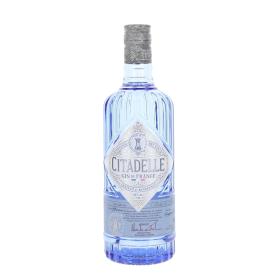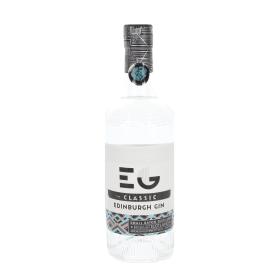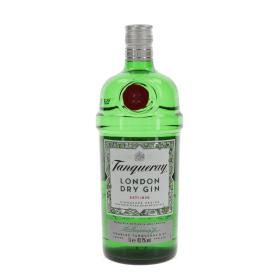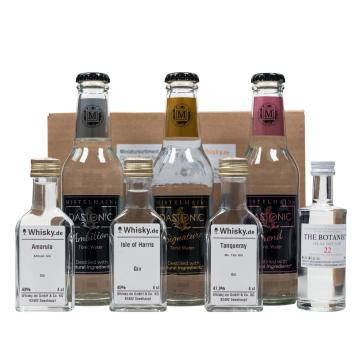
Gin was not always as 'in' as it is today. On the contrary: originally, the Dutch spirit, then known as jenever, was intended for medicinal purposes. The name genever is derived from the Dutch term for juniper 'jeneverbes' or the botanical term 'juniperus'. Over time, this developed into the gin we know today, whose name is a shortened form of genever.

Medicine: Juniper miracle cure
In earlier times, the juniper plant was said to have a number of healing effects: in the Middle Ages, entire villages were fumigated with it to prevent the spread of the plague. The plant is also said to purge negative influences and pent-up emotions. Dutch jenever was originally developed in the late 16th century as a medicine based on the active ingredient juniper to treat kidney problems and tuberculosis. The alcoholising effect of the medicine naturally did not go unnoticed for long.
William III of Orange brought jenever with him to England when he ascended the throne in 1689. The newly crowned king had a dispute with the Catholic French, who had granted asylum to William's predecessor and father-in-law King James. Without further ado, he taxed cognac and brandy with very high punitive tariffs, making his jenever more affordable and popular with the people. Many of his subjects also produced the Dutch brandy themselves and just 20 years later, every fourth household was distilling jenever. One of the reasons for this was that Queen Anne, who was crowned at the beginning of the 18th century, continued the feud with Catholicism and France. She allowed every household in Great Britain - which united England, Scotland and Wales in 1707 - to distil jenever or gin without a licence.
Mass drug: the gin crisis
This also marked the beginning of a dark chapter in the history of gin, a time that was later dubbed the 'gin crisis'. Juniper and spices were not available or affordable to everyone in England at the time, so a lot of fuss was made to imitate the flavour of gin: Sulphuric acid was supposed to give the bad alcohol a 'certain kick', turpentine was added to suggest juniper flavours, sugar and potassium carbonate made the distillates softer. The constant availability of gin made it cheaper and cheaper - you could get gin for a penny in some London pubs. The quality, on the other hand, became increasingly poorer and more hazardous to health. Here are a few statistics: The number of alcoholics rose dramatically. In 1723, the death rate exceeded the birth rate in London. In 1751, 9,000 children died of alcohol poisoning. In the end, the state had to intervene with regulations: it began to monitor the gin market and introduce definitions such as 'dry gin' (= unsweetened gin). Taxes on gin were also eventually increased.
During the period of the gin crisis in the first half of the 18th century, many gin distilleries and brands still known today were established. The Black Friars Distillery in Plymouth was founded in 1697. It is now called Plymouth Distillery and still produces Plymouth Gin today, which now also has a legally protected designation of origin. The Finsbury distillery was opened in 1740 in the spa town of the same name near London. Finsbury is now a district of the metropolis and is known for its particularly pure water. This is of course also an important prerequisite for the distillation of spirits. The Gordon and Bloomsbury (Tanqueray) gin distilleries were also relocated to the London neighbourhood of Finsbury at the beginning of the 19th century due to the good water quality.
At that time, gin was distilled in so-called 'Carter Head Stills'. These were developed by the Carter brothers, who had learnt their craft from Aeneas Coffey. He was the inventor of the Coffey still, a still for continuous distillation. This meant that gin was also produced using the continuous distillation process at the beginning of the 19th century. This made it possible to obtain 'clean' base alcohol for gin quickly and cheaply. The arrival of industrialisation in the production of spirits made it possible to produce higher quality gin. This better and less harmful gin was also readily consumed by connoisseurs, especially workers who moved from the countryside to the city and adapted to local customs.
Fashionable spirit: gin is in
As quality improved, the image of gin also changed noticeably. After the Second World War, the juniper spirit had completely transformed itself from a popular drug to a fashionable spirit. Since then at the latest, it has been impossible to imagine the world of spirits and bars without gin - even the Queen Mum has outed herself as a gin fan.
One of the most important gin trends was set by the military in the British colonies: Soldiers were advised to drink tonic water containing quinine as a malaria prophylactic. They mixed the bitter drink with gin from their homeland to make it milder and more palatable. And the classic long drink 'Gin & Tonic' was born. Initially, the production and consumption of gin was still very much limited to England and Great Britain. But at the beginning of the 20th century, more and more 'bars' began to spring up in Europe. The English word originally meant 'bar' and refers to the shape of the counter at which drinks are served. In these bars, professional bartenders experimented a lot, initially with Dutch jenever, then with English gin and other cult drinks such as the Dry Martini or the Gin Fizz were created.
Like all spirits, gin suffered from Prohibition in the USA, where the production, transport and sale of alcohol was banned nationwide from 1919 to 1933. But soon afterwards, gin was once again the number one mixed spirit. Although vodka, tequila and rum were all the rage at the beginning of the 21st century, the gin industry has been booming since the 2010s: new brands and distilleries are springing up, as are new types of tonic water. One thing is clear: gin is in!